

What Is E-E-A-T in SEO? A Complete Guide to Building Search Trust
Sep 22, 2026
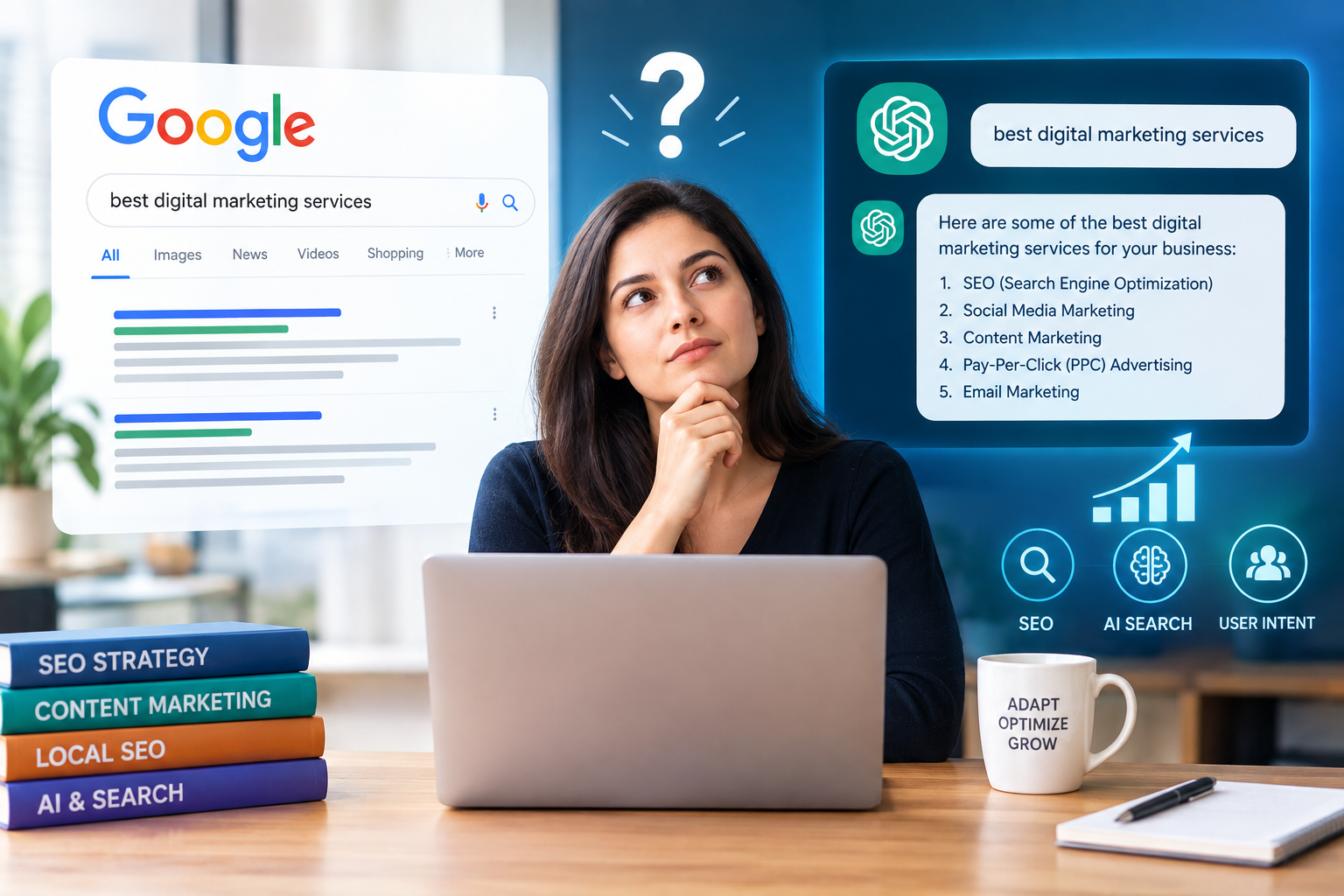
Search is changing faster than ever. People are no longer relying only on traditional search result pages to find information, compare options, research products, or make decisions. AI-powered search experiences are increasingly providing direct, summarized, and context-rich answers.
This raises an important question for website owners and marketers: Will AI search replace traditional Google rankings?
The short answer is no—not completely. Instead, search is evolving from a simple ranking-based model toward a broader visibility model where relevance, authority, helpful content, technical accessibility, and brand trust all matter.
For businesses, this means traditional SEO is not becoming irrelevant. It is becoming more comprehensive. Your website still needs to be discoverable, understandable, useful, and trustworthy if you want sustainable visibility across modern search experiences.
Traditional Google rankings refer to the position a webpage earns within organic search results for a particular query.
For years, businesses have focused on improving rankings through:
Ranking on the first page can generate valuable visibility and qualified traffic. However, ranking position alone does not tell the complete story anymore.
Search engines are increasingly trying to understand the meaning behind a query rather than simply matching individual keywords with webpages. As a result, businesses need to think beyond ranking for isolated terms.
AI search represents a more conversational and context-focused way of finding information.
Instead of presenting users with only a list of webpages, modern search experiences can organize information, summarize concepts, answer follow-up questions, and help users explore a topic from multiple angles.
For businesses, this creates a new form of search visibility.
A webpage may still rank organically while also contributing information to broader answer experiences. This means your SEO strategy should not focus exclusively on achieving a specific ranking position.
The goal should be to establish your website as a reliable and useful source of information.
It is unlikely that AI search will completely replace traditional organic rankings.
Traditional rankings remain valuable because users still need websites for detailed information, product research, services, transactions, original resources, and deeper exploration.
AI-driven search experiences and traditional organic results can therefore work alongside each other.
Think of the future of search as an expanded ecosystem rather than a replacement.
Your website may need to succeed across several visibility opportunities, including:
This makes SEO more important strategically, not less.
One of the biggest changes is the way people formulate queries.
Users can now search using complete questions and detailed descriptions instead of short keyword phrases.
For example, someone may move from searching for:
“SEO agency”
to asking:
“What should a small business look for when choosing an SEO agency for long-term organic growth?”
The second query contains more context and intent.
This shift means your content needs to answer real questions comprehensively rather than repeatedly inserting keywords into a page.
You should understand what your audience wants to accomplish and create content that addresses the complete decision-making journey.
Even as search evolves, the fundamentals of SEO remain important.
Search systems need to discover, crawl, interpret, and evaluate webpages. If your website has serious technical problems, unclear content, poor architecture, or weak information quality, it can struggle to gain visibility regardless of how search technology changes.
That is why working with SEO Services Experts can help you build a stronger foundation that supports both traditional organic visibility and newer search experiences.
A modern SEO strategy should address:
Make sure important pages can be discovered and crawled efficiently.
Check that valuable pages are eligible to appear in search results and are not accidentally blocked or excluded.
Publish useful, accurate, original content that genuinely addresses user needs.
Improve loading speed, responsiveness, usability, and Core Web Vitals where appropriate.
Connect related pages so users and search systems can better understand your website structure.
Keyword rankings are still useful metrics, but they should not be your only objective.
A stronger strategy is to build topical authority.
Suppose you operate an SEO business. Instead of creating one page targeting “SEO services,” you could build a connected content ecosystem covering:
This creates depth around a subject.
When your website consistently demonstrates knowledge across related topics, you can strengthen its overall relevance and authority.
You do not need two completely separate content strategies.
Instead, create genuinely useful content that works for users first while following strong SEO fundamentals.
Do not make readers search through several paragraphs to find the answer.
Start with a clear explanation and then provide supporting details.
Organize content with headings that clearly describe the questions or subjects being discussed.
This makes longer content easier to understand and navigate.
A strong article should anticipate the next questions a reader may have.
If you explain AI search, for example, discuss its impact on rankings, traffic, content strategy, technical SEO, authority, and measurement.
Generic information is easy to reproduce.
Useful insights, examples, practical recommendations, original observations, and real experience can make content more valuable.
SEO and search technology continue to evolve. Review important pages periodically and update outdated information, examples, statistics, and recommendations.
For example, businesses affected by major algorithm changes can review this practical guide on what to do after a Google Core Update to understand how content quality, technical issues, E-E-A-T, and performance analysis can affect recovery.
Use descriptive anchor text to connect related pages. This helps users discover additional information while creating a clearer topical structure.
For businesses looking to improve their organic visibility, exploring comprehensive SEO services for sustainable search growth can provide a structured approach to content, technical SEO, and website optimization.
Trust is becoming increasingly important in modern search.
Your website should demonstrate experience, expertise, authority, and trust through the quality of its content and the credibility of the information it provides.
You can strengthen these signals by:
Strong trust signals can benefit your website regardless of whether a visitor arrives through a traditional result or a newer search experience.
Content alone cannot solve every visibility problem.
Your website needs a technically sound foundation.
Important areas include:
Technical SEO makes it easier for search systems to access and interpret your website.
If your website needs stronger technical foundations, technical SEO optimization for better crawling, indexing, and website performance can help address issues that may limit organic visibility.
If you want your content strategy to perform consistently, partnering with Expert SEO services can help identify technical barriers before they limit your organic growth.
One major concern for businesses is declining clicks.
When users receive useful information directly within a search experience, they may not always visit a website immediately.
That does not mean website visibility has lost its value.
Instead, businesses should start measuring more than rankings and clicks.
Consider tracking:
A page that attracts fewer visitors but generates highly qualified leads can be more valuable than a high-traffic page with weak commercial intent.
As search becomes more conversational, brand recognition can become a valuable advantage.
If users repeatedly encounter your business when researching a particular subject, they may become more familiar with your brand before they are ready to purchase.
This is why your strategy should combine SEO with:
The objective is not simply to rank once. It is to build sustainable visibility around the topics and services that matter to your business.
SEO Services Experts can help businesses adapt by combining traditional SEO fundamentals with broader search visibility strategies.
A modern SEO campaign can include:
The emphasis should be on building a website that is useful to people and technically accessible to search systems.
Businesses that depend on location-based discovery can also benefit from local SEO strategies for stronger local search visibility as part of a broader search strategy.
| Traditional SEO | Modern AI Search Optimization |
| Keyword targeting | Topic and context targeting |
| Ranking positions | Broader visibility |
| Search queries | Conversational questions |
| Individual pages | Connected content ecosystems |
| Backlinks | Authority and trust |
| Click-through rate | Visibility, engagement, and conversions |
| On-page optimization | Comprehensive content understanding |
| Technical SEO | Technical accessibility and structured information |
These approaches should not be treated as competitors.
They are complementary parts of a modern search strategy.
You do not need to abandon your existing SEO strategy because search is changing.
Instead, improve it.
Start by auditing your existing website and identifying pages that are outdated, thin, poorly structured, or technically difficult to access.
Then:
Businesses that adapt early can build stronger foundations for long-term search visibility.
So, will AI search replace traditional Google rankings?
Probably not.
The more likely future is a search environment where traditional organic rankings remain important while new forms of visibility become increasingly influential.
The biggest mistake would be treating SEO and emerging search experiences as completely separate disciplines.
Your best approach is to create a technically healthy website filled with accurate, useful, well-structured, authoritative content. Build topical depth, understand search intent, strengthen your brand, and continuously improve the user experience.
For businesses exploring how AI can support modern SEO workflows, this guide on using AI for better SEO rankings while maintaining human expertise provides additional context on AI-assisted keyword research, content optimization, technical SEO, and performance monitoring.
With guidance from Expert SEO services, you can prepare your website for changing search behavior without abandoning the SEO fundamentals that continue to support sustainable organic growth.
AI search is more likely to complement traditional rankings than completely replace them. Organic results will continue to provide users with detailed websites, products, services, resources, and deeper information.
Yes. Technical SEO, content quality, search intent, website structure, authority, and user experience remain important foundations for online visibility.
It can change how users discover and interact with information. Businesses should therefore measure qualified traffic, conversions, brand visibility, and engagement alongside traditional ranking metrics.
Focus on technically accessible webpages, clear answers, useful content, strong topical coverage, trustworthy information, descriptive structure, and genuine expertise.
Yes. Search is evolving rather than disappearing. A strong SEO strategy helps your website maintain discoverability while adapting to changing search behavior and new visibility opportunities.
Search is moving beyond the traditional idea of simply ranking at position one.
However, that does not make SEO obsolete. It makes a well-rounded SEO strategy more valuable.
Your website still needs strong technical foundations, relevant content, authority, trust, and a clear understanding of what users are trying to accomplish. The businesses that adapt these fundamentals to changing search behavior will be better positioned for sustainable visibility.