

What Should I Do After a Google Core Update?
Jun 29, 2026
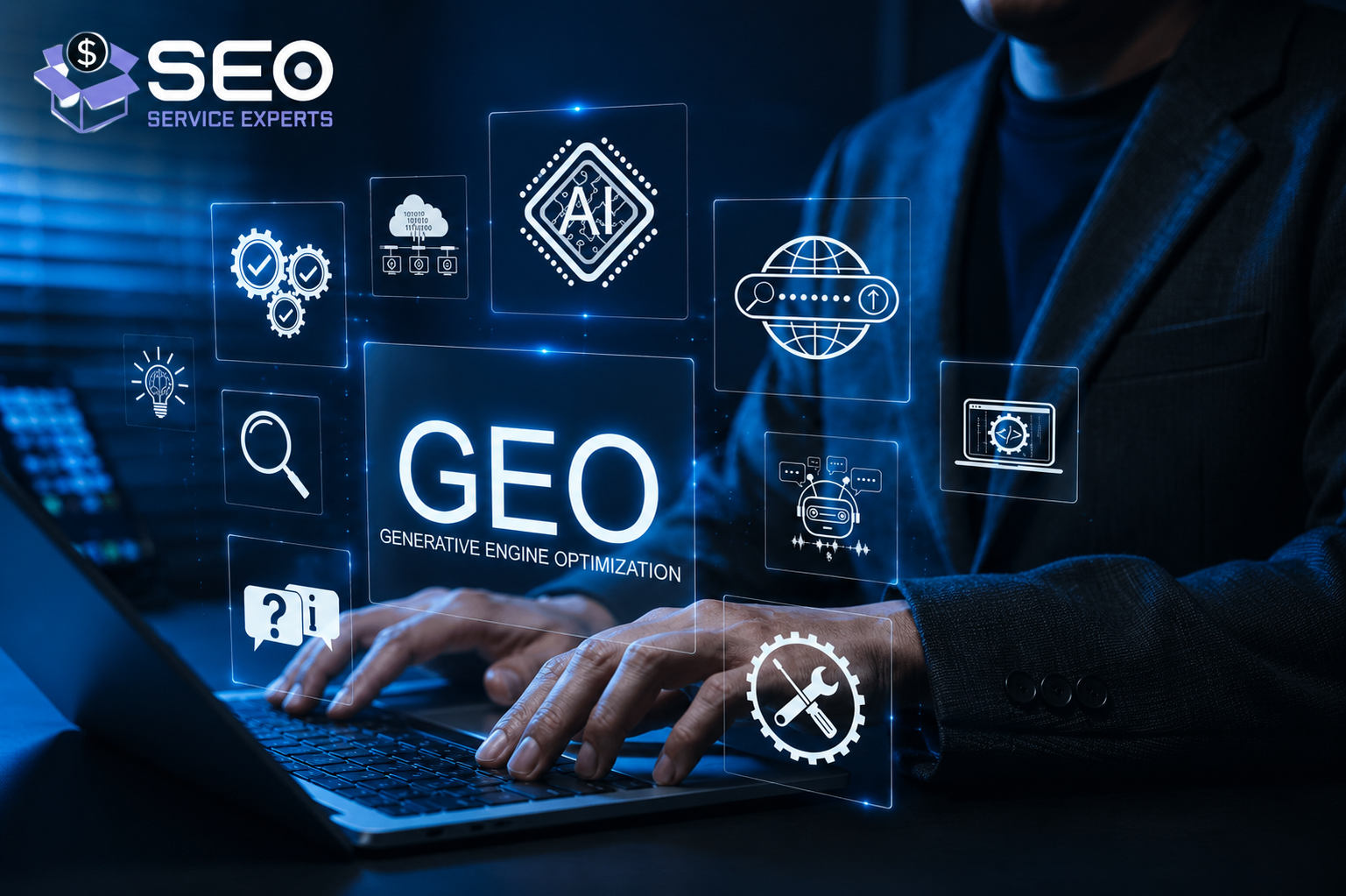
Search is evolving faster than ever. Traditional search engine rankings are no longer the only way users discover information online. AI-powered search platforms and generative search experiences are transforming how people find answers, compare services, and make purchasing decisions.
Generative Engine Optimization (GEO) is the next step in digital visibility. Businesses that understand and implement GEO strategies can improve their chances of being featured in AI-generated responses and conversational search results. In this guide, we’ll explore what GEO is, how it differs from traditional SEO, and why it is becoming essential for businesses in 2026 and beyond.
For years, businesses have focused on ranking higher in traditional search engine results pages (SERPs). While SEO remains crucial, the rise of artificial intelligence is changing how users interact with search technology.
Today, many users ask AI-powered search tools direct questions and receive complete answers without clicking through multiple search results. Instead of browsing pages of links, users increasingly rely on AI-generated responses that summarize information from multiple trusted sources.
This shift has introduced a new optimization strategy known as Generative Engine Optimization (GEO).
GEO focuses on helping businesses become visible within AI-generated answers, recommendations, and conversational search experiences. Rather than only optimizing for traditional rankings, GEO aims to ensure content is recognized, trusted, and referenced by AI systems.
As AI search continues to grow, businesses that adapt early will be better positioned to maintain visibility, authority, and traffic in a rapidly changing digital environment.
Generative Engine Optimization (GEO) is the process of optimizing content so it can be understood, trusted, and referenced by AI-powered search systems and generative search engines.
The primary goal of GEO is to increase the likelihood that your content appears in AI-generated responses when users ask questions related to your expertise.
Traditional SEO focuses on ranking webpages in search results. GEO focuses on influencing the information AI systems use when generating answers.
For example:
Traditional SEO Goal:
GEO Goal:
Both strategies aim to increase visibility, but the methods and user experiences are evolving.
As AI-driven search continues expanding, GEO is becoming an essential component of modern digital marketing.
More users are turning to AI-powered search tools for quick, direct answers.
Instead of searching multiple websites, people often prefer conversational interactions that provide immediate information.
This trend is changing how businesses attract online visibility.
Search behavior is becoming more natural and conversational.
Users now ask questions such as:
AI systems generate detailed responses rather than displaying only links.
Businesses optimized for GEO have a better chance of being included in these answers.
As more organizations recognize the importance of AI search visibility, competition will continue increasing.
Businesses that begin implementing GEO strategies now can establish authority before competitors catch up.
Being referenced within AI-generated answers can create new opportunities for brand exposure, website visits, and customer acquisition.
This visibility may become just as valuable as traditional rankings.
Many businesses assume GEO will replace SEO. In reality, they work together.
Both GEO and SEO focus on:
Strong SEO fundamentals remain essential for GEO success.
Traditional SEO aims to improve rankings within search results.
GEO focuses on helping AI systems understand and trust your content enough to use it within generated answers.
SEO measures success through:
GEO measures success through:
Businesses that combine SEO and GEO can maximize visibility across both traditional search engines and AI-driven search platforms.
The future belongs to brands that optimize for both environments.
Understanding how AI systems evaluate content is critical for GEO success.
AI systems prioritize content from sources that demonstrate expertise and credibility.
Authority signals include:
AI search engines prefer content that is:
Thin or poorly written content is less likely to be referenced.
Businesses that consistently publish content within a specific niche often develop stronger topical authority.
AI systems recognize these expertise signals over time.
Content that uses:
is easier for AI systems to interpret and summarize.
Experience, Expertise, Authoritativeness, and Trustworthiness remain critical factors.
Businesses that demonstrate genuine expertise are more likely to be featured in AI-generated responses.
Publish content that demonstrates expertise and provides real value.
The goal is to become a trusted resource within your industry.
AI systems frequently pull information from content that directly answers user questions.
Use clear, concise explanations whenever possible.
Focus on creating clusters of related content around your core services and areas of expertise.
This helps establish credibility and relevance.
Organized content improves readability for both users and AI systems.
Use logical heading structures throughout every article.
Fresh, accurate information is more likely to be trusted and referenced.
Regular content updates support both SEO and GEO performance.
Backlinks continue to influence authority and trust.
Strong backlink profiles can improve visibility across both traditional and AI-driven search experiences.
Write content that reflects how people naturally ask questions.
This improves relevance for AI-powered search interactions.
Short, low-value articles rarely perform well in AI search environments.
Comprehensive content generally provides better results.
AI-generated content without human review can lack originality, expertise, and accuracy.
Human oversight remains essential.
Content should solve real problems and answer actual questions.
User-focused content is more likely to earn visibility.
Disorganized pages make it difficult for AI systems to understand information.
Structure matters.
Old statistics, obsolete strategies, and inaccurate advice reduce trustworthiness.
Regular updates are critical.
Businesses should clearly demonstrate industry knowledge and professional experience.
At SEO Services Experts, we understand that the future of search extends beyond traditional rankings.
Our GEO-focused approach includes:
We create authoritative content designed to answer user questions and support AI search visibility.
Our experts develop content ecosystems that strengthen industry credibility and expertise.
Strong technical foundations help search engines and AI systems understand your content more effectively.
We implement strategies that improve the likelihood of content being referenced in AI-generated responses.
Our approach combines traditional SEO with GEO best practices to create sustainable visibility across multiple search environments.
The future of search will likely become even more conversational and personalized.
Emerging developments may include:
Businesses that adapt early will have significant advantages.
Rather than viewing GEO as a replacement for SEO, forward-thinking organizations should see it as an evolution of search optimization.
The brands that build authority, trust, and expertise today will be best positioned for tomorrow’s AI-driven search landscape.
Generative Engine Optimization (GEO) is becoming one of the most important developments in digital marketing.
As AI-powered search continues changing how users discover information, businesses must expand beyond traditional SEO strategies and optimize for AI-generated visibility as well.
The good news is that many GEO best practices align with strong SEO fundamentals: creating valuable content, demonstrating expertise, building authority, and focusing on user needs.
Businesses that invest in GEO now can gain a competitive advantage, strengthen brand visibility, and improve their chances of being featured in AI-generated responses.
At SEO Services Experts, we help businesses prepare for the future of search through advanced SEO and GEO strategies designed to maximize visibility, authority, and long-term growth.
Generative Engine Optimization (GEO) is the practice of optimizing content so AI-powered search systems can understand, trust, and reference it within generated responses.
SEO focuses on improving rankings in search results, while GEO focuses on increasing visibility within AI-generated answers and recommendations.
AI-powered search is becoming increasingly popular, making GEO essential for maintaining online visibility and competitiveness.
Yes. Proper GEO strategies can increase the likelihood of content being referenced by AI search systems.
Absolutely. GEO complements SEO rather than replacing it. Businesses benefit from implementing both strategies.
By creating authoritative content, demonstrating expertise, answering user questions clearly, and maintaining strong SEO fundamentals.
Content quality is one of the most important GEO factors because AI systems prioritize accurate, trustworthy, and valuable information.